

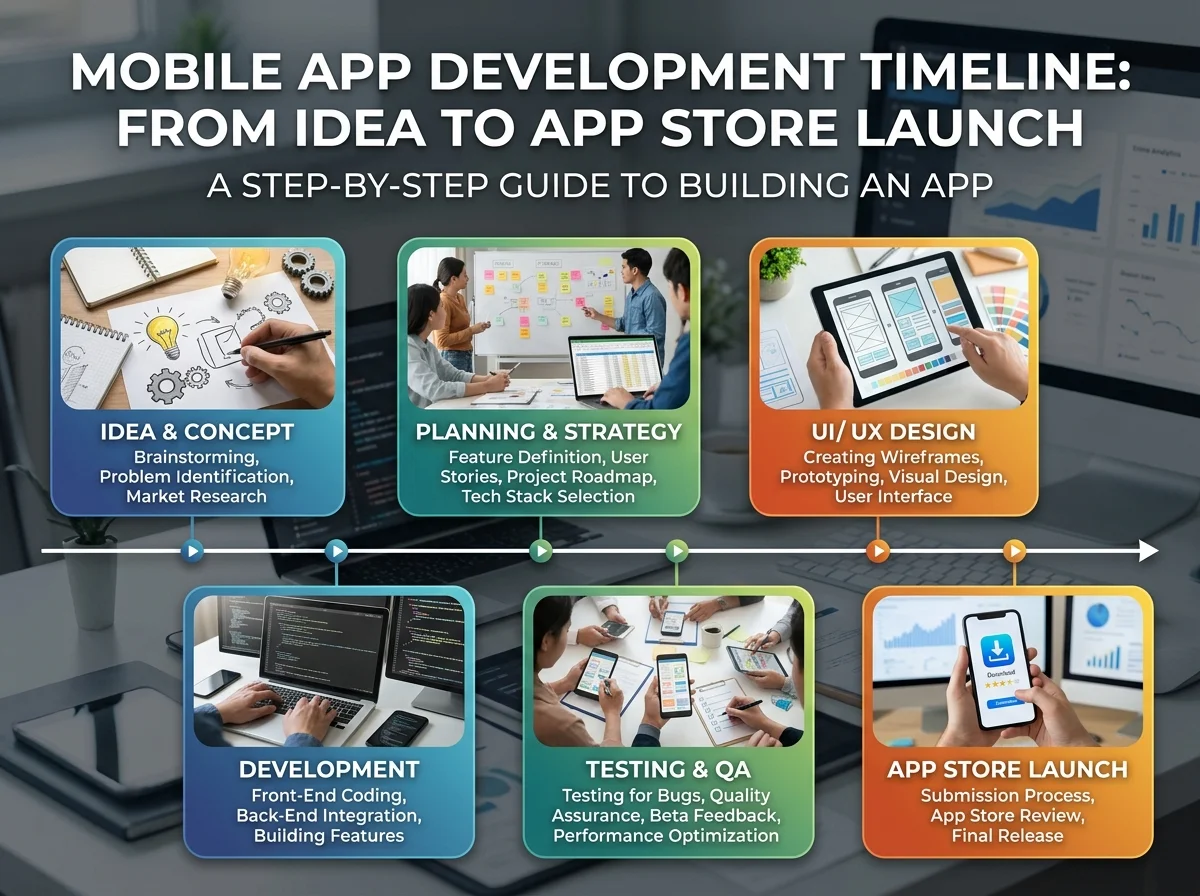
Launching a mobile app is exciting, but many businesses underestimate the time and planning required to bring an idea to life. At All 4 One Local, understanding the development process can help businesses plan their project with realistic expectations. It is important to mention that, for some applications, the period may take a few months to develop due to complex features and long testing processes by platforms. Knowing how long to build an app helps to understand the timings and avoid unexpected hurdles.
Everything from shaping your idea to bringing your app to life on the App Store or Google Play affects how effective your app will be. Rushing or skipping a step usually ends up costing revisions, creating bad user experiences, or causing delays in launch.
In this guide, you’ll be taken step-by-step through each of the app development stages, what influences mobile app development timelines, and pro tips to bring your project from conception to launch as fast as possible.
Why Every App Development Timeline Is Different
Mobile apps never all have the same timeline. You can build a simple business application with basic functionality more quickly than building a feature-rich platform requiring custom integrations, real-time updates, or advanced security.
Several things can shape how long a project takes, including:
- The number of features and functionality
- Platform selection (iOS, Android, or both)
- UI and user interface complexity
- Third-party integrations
- Testing requirements
- Feedback and revision cycles
- Experience of the development team
| Quick Insight: A realistic timeline focuses on building a reliable, user-friendly app instead of simply launching as quickly as possible. Investing enough time in each stage often reduces costly fixes after release. |
The Main Stages of Mobile App Development
A clear development process is defined for any mobile application project. Despite the fact that timelines can vary, most app projects go through similar key stages before they are in the hands of users.
Discovery and Project Planning
Your app’s success starts with the strategy, not the code. During the initial stage, you will focus on understanding business objectives, identifying the target market, and defining the problem the app should solve.
Typical planning activities include market and competitor research, defining project objectives, identifying the target audience, creating user flow diagrams, prioritizing core features, and selecting the appropriate technology stack.
Having a well-planned baseline helps prevent unnecessary scope changes later in the project. It also helps businesses align the app with their broader digital strategy, including website development and other online services.
UI/UX Design and Prototyping
After the requirements are finalized, designers and developers begin shaping what users will interact with. This stage focuses on turning the planned features into a clear and practical interface before coding begins.
The process usually includes wireframes, interactive prototypes, screen layouts, navigation structure, branding elements, and user experience improvements.
Stakeholders can review the prototype before development starts and recommend changes. Solving design problems at this stage is far easier than fixing them during coding.
App Development and Coding
Once the designs are signed off, developers start bringing the prototype into a working application. This stage is a core part of software development, where the planned interface, features, and technical requirements are turned into a functional product.
Development typically includes frontend development, backend development, database setup, API integrations, user authentication, core feature implementation, and real-time functionality where required.
For cross-platform development, developers may use a shared codebase to cover both iOS and Android. Native applications, on the other hand, are built specifically for each operating system separately. This step can take the longest, as during development multiple features are built, tested, and refined before going green to move on to the next step in your project.
Testing and Quality Assurance
An application has to go through several testing steps before reaching real users to make sure that it behaves as expected. Testing helps the development team identify technical issues before they affect the final user experience. Quality assurance often includes functional testing, performance testing, device compatibility testing, security testing, bug fixing, and beta testing with selected users.
By testing at various levels during development, you can identify problems early on and avoid delays while enhancing the user experience after launch.
Typical Mobile App Development Timeline by Project Type
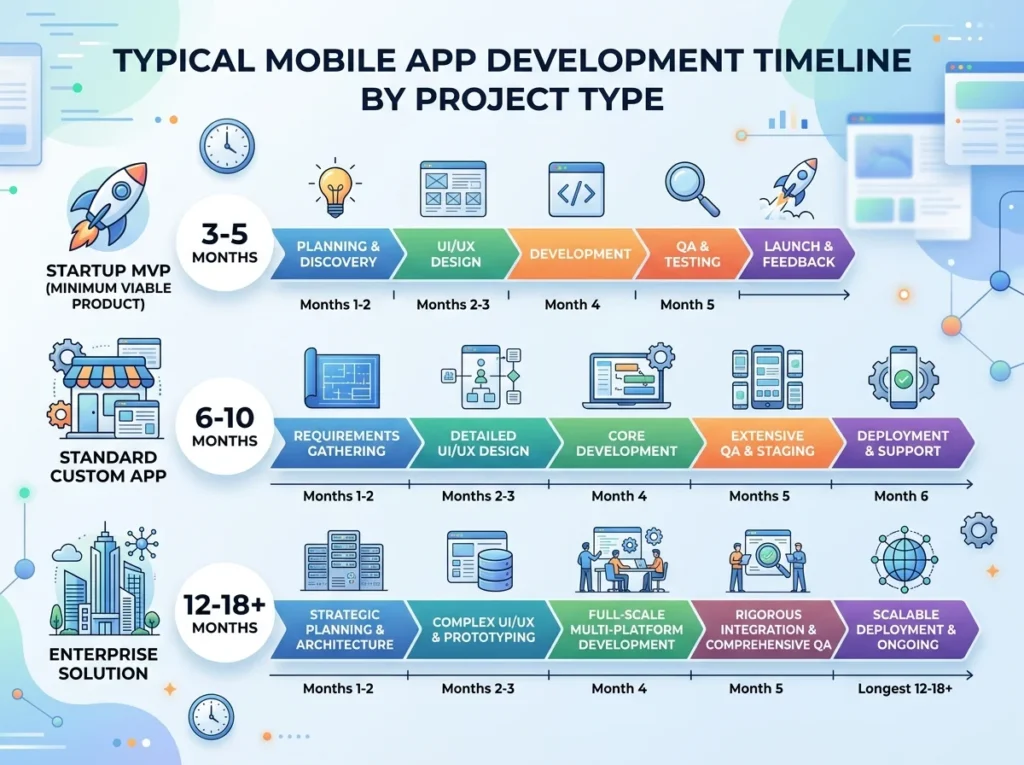
While every project is different, in general, the complete timeline largely relies on how complex the app features and development needs are. Here is an approximation of the average time it takes to build different types of mobile applications.
| App Type | Estimated Timeline |
| Basic MVP (Minimum Viable Product) | 2–4 months |
| Simple Business App | 3–5 months |
| Medium-Complexity App | 5–8 months |
| Enterprise or Feature-Rich App | 8–12+ months |
Note that all these estimates consist of planning, designing, developing, testing, and performing iOS app development review processes. Custom additions or major changes to the schedule during development can mean longer times.
What Can Delay an App Launch?
Even the best-laid plans can encounter delays. Identifying potential challenges early enables businesses to plan attainable timelines and minimise delays.
Changing Requirements During Development
One of the major reasons projects take longer is adding features after development has started. Each feature you add to the codebase tends to affect design, coding, testing, and quality assurance. Having a straightforward roadmap of what your project will entail before kicking off development goes a long way in preventing these changes.
Third-Party Integrations
Many apps connect with external services such as payment gateways, maps and navigation, chat platforms, social media logins, analytics tools, and cloud storage services. These integrations can add useful functionality without requiring every feature to be built from scratch.
However, every integration also requires additional development and testing to make sure the external service works properly with the application. This can increase the project’s technical requirements and maintenance needs.
Extensive Testing and Bug Fixing
Not one app comes from the first build out perfectly. During the testing phases, developers usually find bugs that have to be fixed before release.
Fixing bugs takes extra time (and automated tests, as we discussed before) but guarantees a stable and reliable application, which translates into a better experience for real users.
App Store Approval
Most of the time, completing your application is not the last step. Apple and Google review apps before their release, but Apple’s review system is much more stringent. Common reasons for approval delays include missing privacy information, performance issues, policy violations, incomplete app information, and bugs discovered during review.
The key is to prepare your submission very carefully to avoid rejection. A thorough review before submission can help identify potential problems and reduce unnecessary delays.
How to Speed Up the App Development Process

Start with an MVP
Instead of adding every feature to your product before release, it is often more practical for organizations to launch an MVP that delivers only the primary functionality. This creates an opportunity to test the core idea before committing significant resources to additional features.
An MVP allows you to launch sooner, collect feedback from real users, validate your business idea, and reduce initial development costs. Future updates can then be improved using actual customer insights rather than assumptions.
This approach can help businesses build the product around what users actually need while avoiding unnecessary development work early on.
Finalize Requirements Before Development
Clearly defining project goals before coding begins helps prevent unnecessary revisions later. A clear plan gives the development team a better understanding of what the application needs to achieve. This includes agreeing on core features, user flow, design preferences, platform selection, and business objectives before development starts.
The project usually goes more smoothly when fewer major changes are introduced during development.
Maintain Clear Communication
Communication among business owners, designers, developers, and project managers on a regular basis keeps everyone aligned. Clear updates also make it easier to address changes before they affect the overall project. Weekly progress reviews help the team identify issues early, track development milestones, adjust priorities when needed, and avoid misunderstandings.
Often, effective communication saves a lot more time than fast development.
Test Throughout the Project
If you do not test the application until the last stage of development, it can slow down the process and make problems more expensive to fix. Testing throughout the project helps the team identify issues while the relevant features are still being developed. Continuous testing allows the team to catch bugs earlier, improve app performance, verify new features immediately, and reduce large-scale revisions before launch.
This approach can result in a faster development cycle and easier deployment.
Why Post-Launch Support Is Just as Important
Your journey does not end with launching your application. Successful apps do not remain static; they adapt as necessary due to user feedback, changing technology, and business growth.
After launch, development teams often focus on:
- Monitoring performance
- Fixing newly discovered bugs
- Improving security
- Adding requested features
- Updating operating system compatibility
- Reviewing analytics and user behavior
Continually investing time in improvement also keeps users happy from now till the end of time, while helping your business align itself even more effectively for decades to come.
Apps with regular updates generally do better in the long term, as they may evolve and keep pace with changing user expectations while remaining a managed product.
Frequently Asked Questions
How Long Does It Take to Build a Mobile App?
The time required depends on the app’s complexity, features, and development approach. A simple MVP may take a few months, while feature-rich or enterprise applications often require considerably more time for planning, development, testing, and deployment.
What Stage Usually Takes the Longest?
Development is by far the longest stage of the project. This touches on everything from developing the front-end and back-end to core features, third-party integrations, and constant testing along the way.
Can an App Be Launched Faster?
Yes, but only when well planned. Begin with a minimum viable product (MVP) that restricts redundant features, keep seamless contact points with the development team, and prevent any large changes in scope to drastically decrease the overall timeline.
Why Does App Store Approval Sometimes Take Longer?
Both Apple and Google review submitted applications before publishing them. Delays can happen if the app does not meet store guidelines, contains technical issues, has incomplete information, or requires additional revisions during the review process.
What Happens After an App Is Launched?
Launching is only the beginning. The majority of apps that have been at least somewhat successful are still being updated with performance improvements, bug fixes, new features, and security patches — as well as for the simple reason of responding to user feedback. It is through continuous maintenance that the app remains competitive and valuable over time.
Key Takeaways Before You Start Building Your App
Planning, design, quality development, and further adjustments after the start of the project are key parts of building a successful mobile application. No two mobile app development timelines are alike, but knowing what each stage entails helps businesses prepare to make informed decisions, avoid unnecessary delays, and build higher-quality products.
If you have an app idea ready to go and are looking for guidance from the drawing board to App Store launch, then we can help at All 4 One Local. With a focus on reliability, user-friendliness, and keeping the process transparent and efficient, we build mobile applications that are in line with your business goals.
Share your project requirements with us today and contact us to take the first step toward launching your next mobile app.