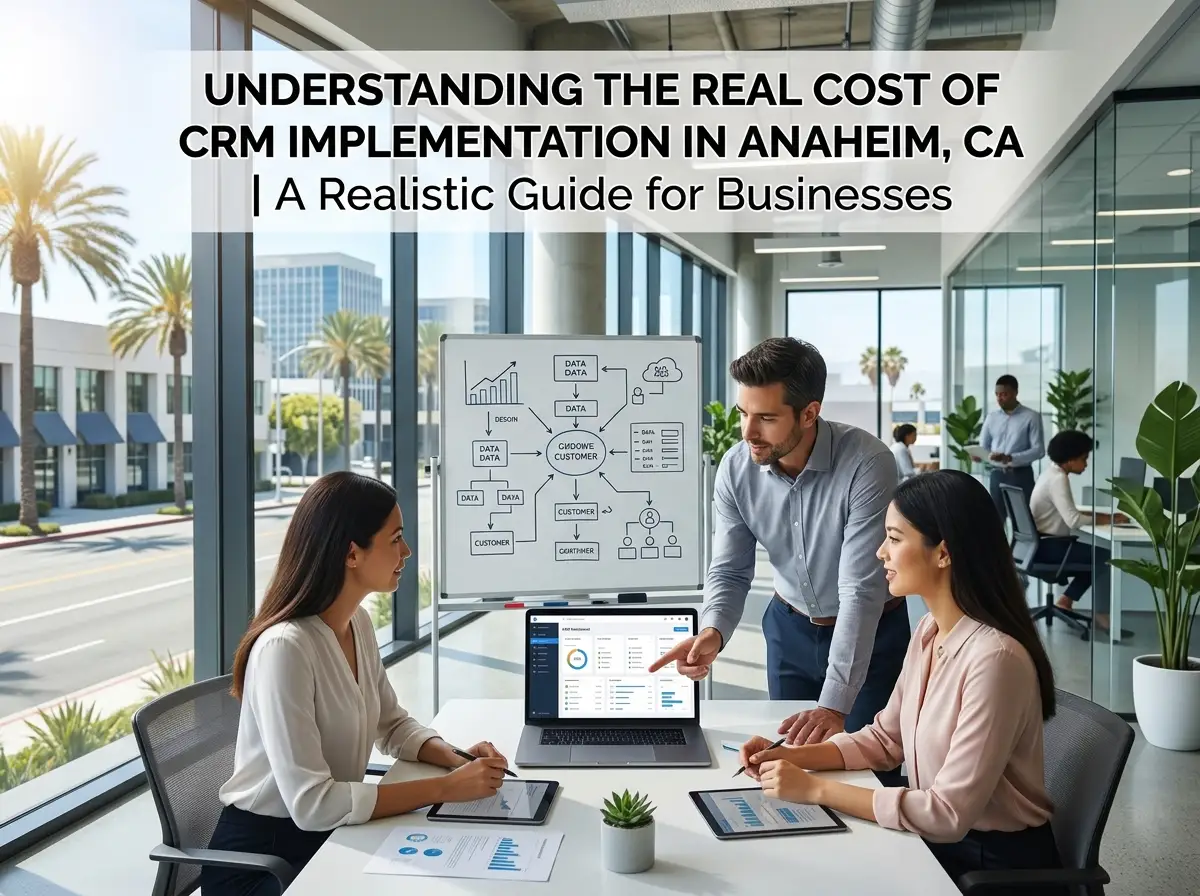


Your business needs better customer relationship management systems urgently. You’re losing track of customer information and sales opportunities. You want to implement CRM system implementation that actually works. Understanding customer relationship management helps you serve customers better. Selecting the right CRM software is critical decision. CRM selection process requires careful evaluation of options. Business automation improves efficiency and saves time daily. Customer data management keeps information organized and accessible. This comprehensive guide explains everything about CRM systems. Implementation process detailed. Selection criteria explained. Whether you’re a growing business or established enterprise, our expert CRM provider services help you select and implement the perfect customer relationship management solution. Real information. Smart decisions. By the end you’ll understand CRM benefits completely.
Why CRM System Implementation Matters For Businesses
Better Customer Relationships Improve Business Success
CRM systems track all customer interactions. Customer history is instantly available. Personal information helps personalize service. Follow ups happen automatically and consistently. Customers feel valued and remembered. Better relationships increase loyalty significantly. Satisfied customers refer other businesses. Long term relationships are more profitable. Customer retention costs less than acquisition. Good customer relationships drive business growth.
Increased Sales Efficiency And Pipeline Management
CRM tracks sales opportunities and pipeline. Automated reminders prevent missed follow ups. Task assignments ensure nothing falls through. Sales forecasting becomes more accurate. Team visibility improves team accountability. Sales process becomes streamlined and efficient. Time spent on admin work decreases. More time is spent selling. Sales numbers increase with CRM system. Pipeline management prevents missed opportunities. Discover how sales teams specifically benefit from CRM implementation in our detailed guide on CRM benefits for sales teams including productivity boosts and deal closing strategies.
Improved Team Collaboration And Communication
CRM centralizes all customer information. Team members access same information. Communication between departments improves greatly. Customer service becomes more consistent. Less duplicate work happens across teams. Team efficiency increases with better information. Collaboration improves when all aligned. Information sharing prevents miscommunication. Team productivity increases significantly. Better coordination improves customer service.
Data Organization And Customer Insights
CRM organizes customer data centrally. Information is searchable and accessible. Customer patterns become visible. Insights help improve products and services. Reports show business trends clearly. Decision making improves with better data. Analytics reveal customer preferences. Business intelligence guides strategy. Data drives better decisions. Organized data improves business results.
Understanding Customer Relationship Management Basics

What CRM Systems Do For Businesses
CRM stores all customer information centrally. Contact details are always accessible. Interaction history is documented completely. Purchase history is tracked always. Communication preferences are recorded. Customer preferences are documented. Account status is current. Service history is complete. Notes track important information. CRM centralizes all customer knowledge.
Key Features Of Modern CRM Systems
Contact management stores customer details. Sales pipeline tracks opportunities. Task management assigns and tracks work. Email integration connects communications. Reporting provides business insights. Forecasting predicts future results. Mobile access works anywhere. Integration with other tools. Automation handles repetitive tasks. Customization fits business needs.
Different CRM Types And Approaches
Sales CRM focuses on sales process. Service CRM handles customer support. Marketing CRM manages campaigns. Enterprise CRM serves large organizations. Cloud CRM operates online. On premise CRM installs locally. Open source CRM is customizable. Industry specific CRM targets sectors. Hybrid CRM combines approaches. Different types serve different needs.
CRM Software Selection And Evaluation
Top CRM Software Options Available
Salesforce is industry leading choice. HubSpot is popular for small business. Microsoft Dynamics is enterprise option. Zoho CRM is affordable choice. Pipedrive focuses on sales. Freshsales offers good functionality. Copper is simple choice. Insightly works for projects. Agile is SMB friendly. Nimble is social CRM.
Evaluation Criteria For CRM Selection
Cost is primary consideration. Ease of use matters greatly. Features must match your needs. Integration capability is important. Scalability supports future growth. Customer support is critical. Data security is essential. Customization options are helpful. Mobile access is increasingly important. Reporting capabilities guide decisions.
Cost Analysis And ROI Calculation
CRM costs vary widely by vendor. Small business CRM costs fifty to five hundred monthly. Enterprise CRM costs thousands monthly. Implementation costs add to total. Training costs are significant. Data migration costs add up. ROI appears in three to six months. Time savings reduce costs. Increased sales boost revenue. Improved efficiency improves margins.
Implementation Timeline And Phases
Planning phase takes two to four weeks. Vendor selection takes one to two weeks. Customization takes two to six weeks. Data migration takes two to four weeks. Training takes one to two weeks. Full implementation takes three to four months. Small businesses complete faster. Large enterprises take longer. Phased implementation is possible. Timeline depends on complexity.
Business Automation Through CRM Systems
Automating Repetitive Sales Tasks
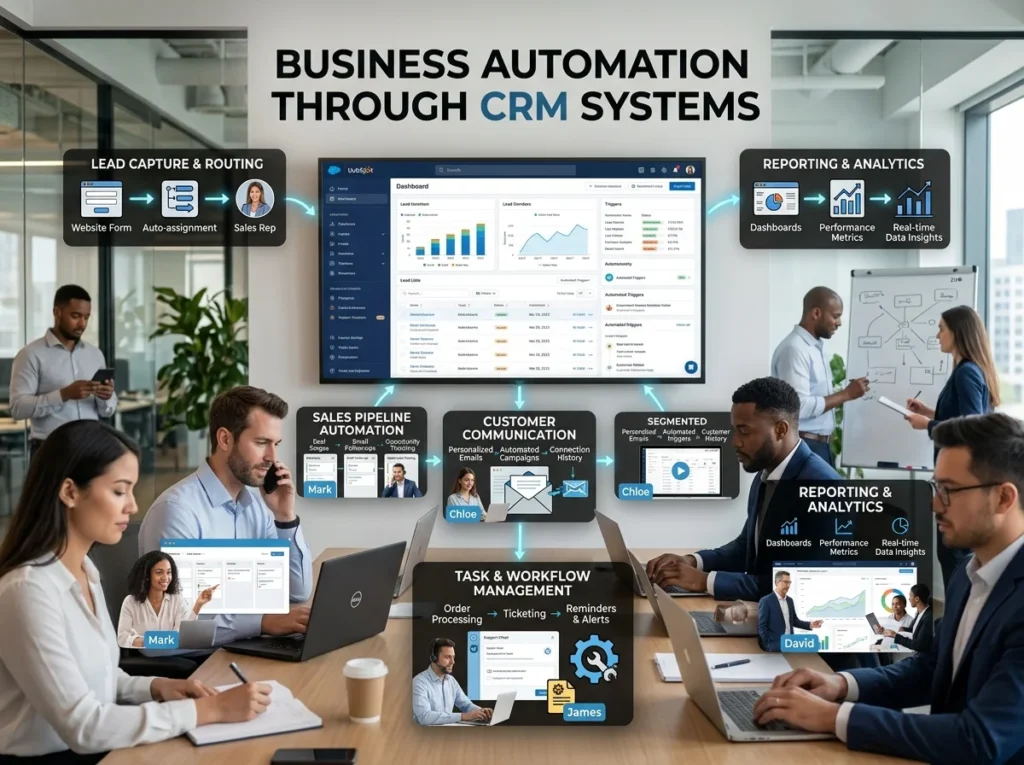
Lead scoring automates qualification process. Email workflows send automatically. Task reminders keep people on track. Follow up sequences trigger automatically. Data entry is automated. Reports generate on schedule. Notifications alert about deadlines. Escalation happens automatically. Approval workflows process correctly. Automation saves significant time.
Automating Customer Service Processes
Ticket routing directs to right person. Escalation happens when needed. Knowledge base provides self service. Chat bots handle simple questions. Feedback requests are automated. Follow up emails are sent. Survey distribution happens automatically. Resolution tracking is automatic. Response time improves. Customer satisfaction increases.
Marketing Automation Integration
Email campaigns send on schedule. Lead nurturing happens automatically. Scoring identifies ready prospects. Behavior triggers send timely messages. Personalization happens at scale. A/B testing optimizes campaigns. Landing pages track conversions. Lead forms capture information. Attribution tracking works.Marketing efficiency improves. To maximize your CRM’s marketing capabilities, explore our comprehensive marketing automation workflows guide covering email sequences, lead nurturing, and customer journey mapping strategies.
Analytics And Reporting Automation
Reports generate automatically on schedule. Dashboards update in real time. Alerts notify about anomalies. Forecasting calculations happen automatically. Pipeline analysis is automatic. Performance tracking is continuous. Trend analysis identifies patterns. Comparative reporting shows changes. Insights are delivered automatically. Data analysis is continuous.
CRM Selection Process Step By Step
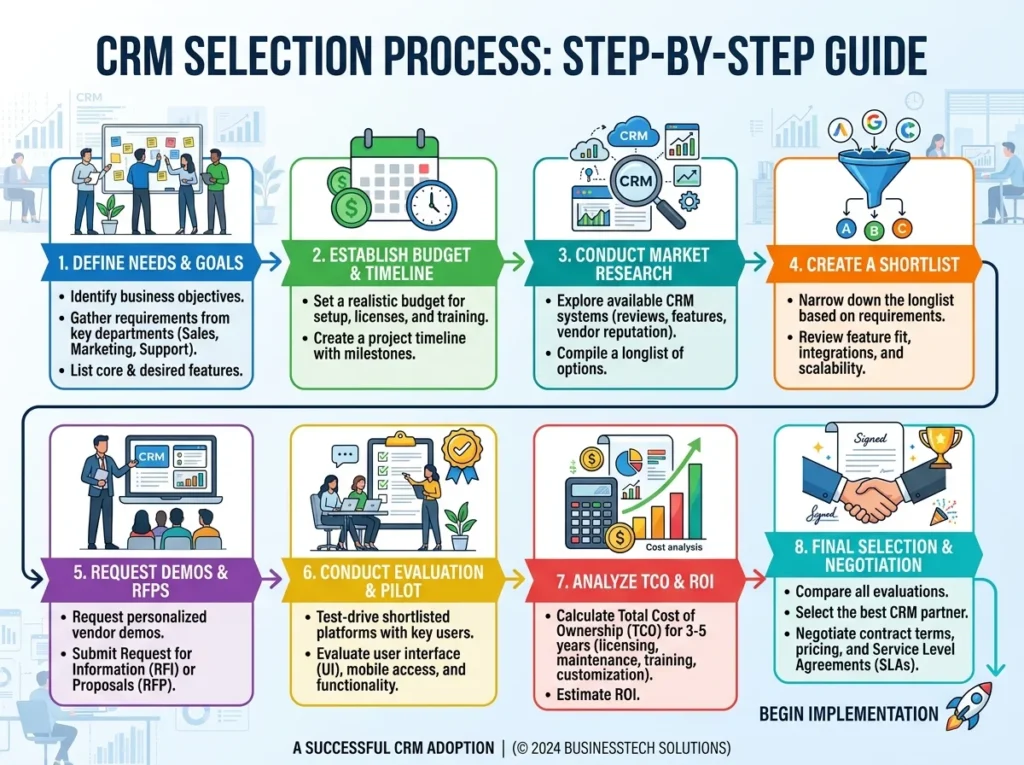
Step One: Define Business Requirements
Assess current business processes. Identify pain points and problems. Define desired outcomes clearly. List must have features. Identify nice to have features. Determine user count needed. Assess budget realistically. Set implementation timeline. Identify key stakeholders. Document requirements thoroughly.
Step Two: Evaluate And Compare Options
Research available CRM systems. Review software reviews and ratings. Request product demonstrations. Compare features thoroughly. Analyze pricing models. Check integration options. Evaluate support quality. Assess customization capability. Consider long term scalability. Compare total cost of ownership.
Step Three: Select Best Fit Solution
Choose solution matching requirements. Negotiate pricing and terms. Finalize implementation agreement. Select implementation partner. Plan implementation timeline. Allocate budget properly. Prepare team for change. Schedule training programs. Plan data migration. Document decision and rationale.
Step Four: Plan Implementation Strategy
Define implementation approach and phases. Identify implementation team members. Create detailed project plan. Set realistic milestones. Assign responsibility clearly. Communicate plan to team. Prepare infrastructure needed. Plan data migration process. Schedule training sessions. Plan for support needed.
Step Five: Execute Implementation
Set up system environment. Configure system settings. Customize as needed. Migrate data carefully. Test functionality thoroughly. Train users on system. Go live with system. Support users after launch. Monitor system performance. Address issues quickly.
Step Six: Monitor And Optimize
Track user adoption rates. Measure system usage metrics. Gather user feedback. Address issues found. Optimize workflows identified. Expand usage gradually. Plan additional training. Review ROI achieved. Plan future improvements. Continuously optimize system.
Customer Data Management Best Practices

Data Quality And Governance
Establish data standards. Validate data on entry. Remove duplicate records. Update information regularly. Archive old records. Protect sensitive data. Ensure data accuracy. Define data ownership. Set governance policies. Maintain data integrity.
Data Security And Privacy
Encrypt sensitive data. Control access appropriately. Track data usage. Backup data regularly. Restore capabilities. Comply with regulations. Audit data access. Monitor for threats. Enforce password policies. Train users on security.
Data Organization And Structure
Use consistent naming conventions. Organize records logically. Create custom fields. Define field types. Set field validation. Use standard records. Create templates. Standardize processes. Document structure. Maintain consistency.
Data Analysis And Insights
Review data patterns regularly. Identify trends and issues. Track key metrics. Create insightful reports. Export data safely. Share insights with team. Use data for decisions. Monitor performance metrics. Identify improvement areas. Act on insights.
FAQ About CRM System Implementation
How do I choose right CRM for my business?
Define business requirements clearly. Evaluate available options. Compare features and pricing. Request demonstrations. Check references. Consider scalability needs. Evaluate support quality. Compare total cost. Choose best fit. Professional consultation helps.
How long does CRM implementation take?
Small business implementation takes three to four months. Medium business takes four to six months. Enterprise implementation takes six to twelve months. Complexity affects timeline. Phased approach takes longer. Concentrated effort completes faster. Professional implementation accelerates process. Timeline depends on scope. Plan accordingly for change.
What is typical CRM implementation cost?
CRM software costs fifty to five hundred monthly. Implementation costs two thousand to fifty thousand dollars. Training costs one thousand to ten thousand dollars. Data migration costs one thousand to five thousand dollars. Total costs vary widely. Small business costs less. Enterprise costs significantly more. Professional services add cost. ROI appears within six months. Long term savings are significant.
How do I ensure CRM adoption success?
Get executive sponsorship and support. Involve users in selection. Provide comprehensive training. Start with champions. Communicate benefits clearly. Address concerns and resistance. Provide ongoing support. Celebrate early wins. Monitor adoption metrics. Continuously improve system.
What data should I migrate to CRM?
Migrate customer contact information. Migrate customer history data. Migrate account information. Migrate sales opportunities. Migrate past transactions. Migrate service tickets. Migrate communication history. Leave old data. Merge duplicates first. Plan migration carefully.
How do I measure CRM success?
Track user adoption rates. Measure system usage. Monitor data quality. Track sales metrics. Measure customer satisfaction. Track support metrics. Calculate ROI achieved. Monitor cost savings. Assess team productivity. Review regularly and adjust. Ready to implement the right CRM system for your business? Contact our CRM experts today for a free consultation and customized implementation roadmap tailored to your specific needs.