
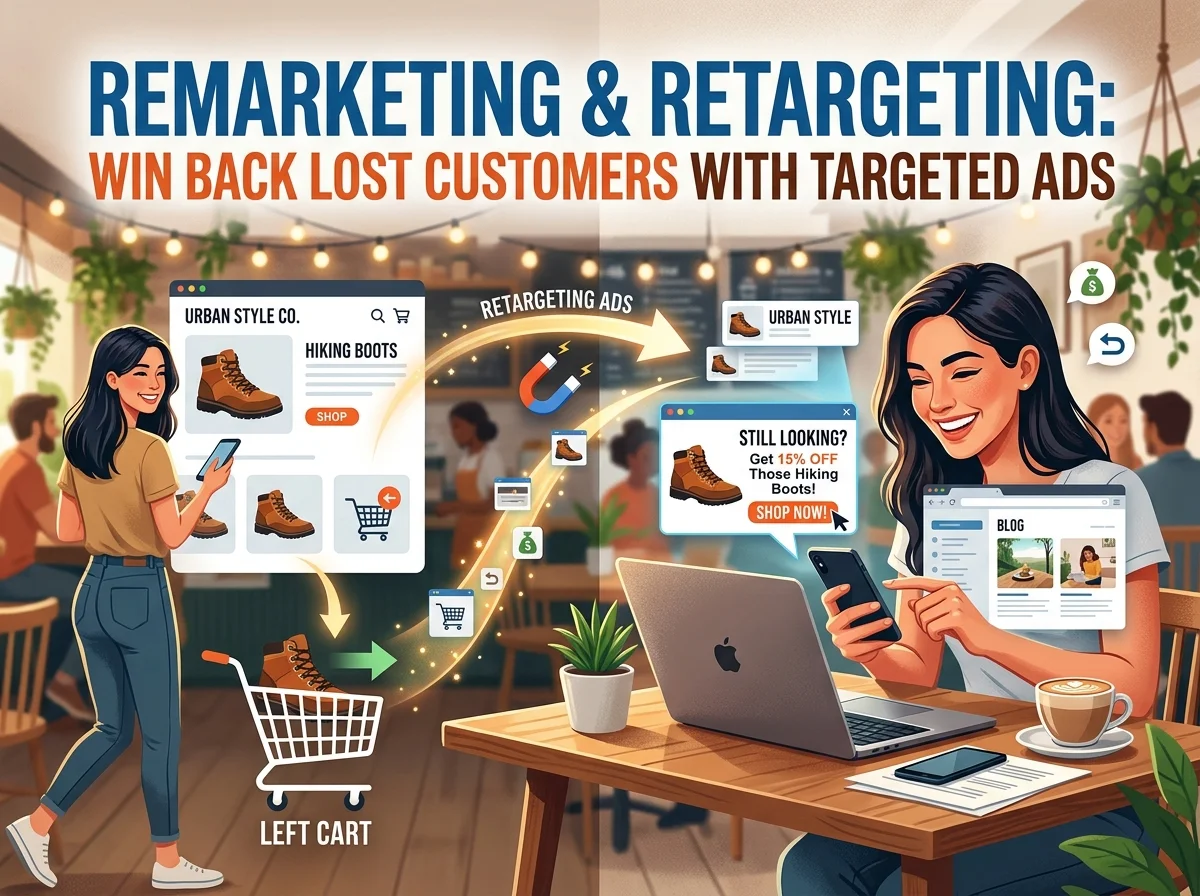
Someone visits your site. Looks around. Leaves. Never comes back. You lost them. That’s wasted opportunity.
Wait. You can reach them again. Remarketing retargeting campaigns bring them back. Show them ads. Remind them. Convert them. This guide covers everything. What pixel tracking is. How audience segmentation works. What dynamic ads do. Solving cart abandonment. Customer re-engagement strategies. Real results. Smart tactics.
By the end, you’ll know how to bring people back. You’ll recover lost customers. You’ll increase conversions. You’ll make more money.
This guide covers everything about remarketing and retargeting. But retargeting is just one part of a larger PPC strategy. For a complete view of how remarketing fits into overall PPC advertising including search ads, display ads, and conversion optimization check out our Complete PPC advertising strategy guide.
Why Remarketing Retargeting Campaigns Matter
Most visitors don’t convert first visit.
Visitors Leave Without Buying
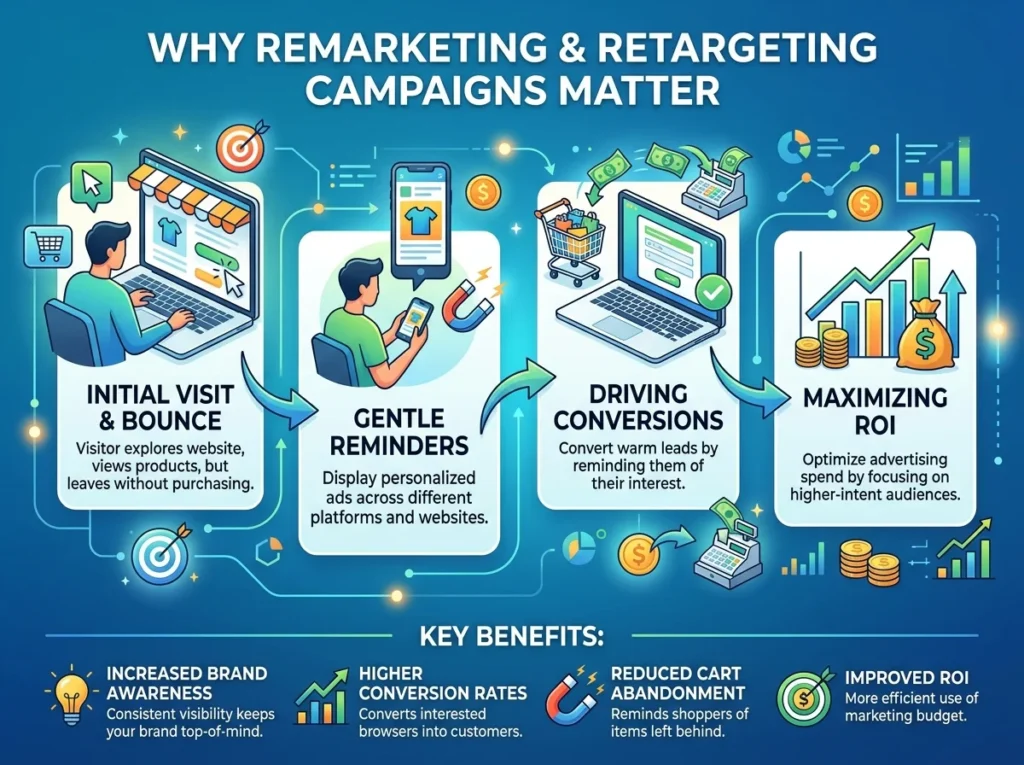
80%+ of visitors leave without converting. They visit. They browse. They leave. One and done. Lost.
But they showed interest. They came to your site. They looked around. They’re prospects. Not lost. Just unfinished business.
Second Chances Work
People often need multiple touches. First visit: awareness. Second visit: consideration. Third visit: decision.
Remarketing retargeting campaigns provide those touches. Bring them back. Multiple exposures. Higher conversion.
Cost Effective
Retargeting is cheap. Cheaper than new customer ads. Audience already interested. Higher conversion rate. Lower cost per customer.
Smart money allocation. Efficient spending.
High ROI Potential
Retargeting ROI often 3:1 or better. Spend $1,000. Get $3,000+ revenue. Very profitable. Worth doing.
One of highest-ROI advertising methods.
Understanding Pixel Tracking: How It Works
Tracking is foundation of retargeting.
Pixel tracking is essential for retargeting, but it’s also critical data for overall PPC optimization. The visitor data your pixel collects helps you understand which traffic sources are most valuable allowing you to reduce your PPC costs through smart budget allocation and focus spending on your highest-performing audiences
What Is Pixel Tracking?
Code snippet. Added to your website. Tracks visitors. Records what they do. Where they go. How long they stay.
Invisible to visitors. But collects data. Builds audience list.
How Pixel Works
Visitor lands on site. Pixel fires. Visitor ID recorded. Visitor activity tracked. Data collected.
Visitor leaves. Pixel remembers them. Can show ads later. To this specific visitor.
Pixel Placement
Code goes on every page. Or specific pages. You decide. More pages = better tracking.
Usually goes in website header. Technical but straightforward. Any web developer can install.
Privacy Compliance
Tracking requires disclosure. Privacy policy needed. Cookie notice needed. Consent preferred.
Regulations vary by location. GDPR in Europe. CCPA in California. Comply with local laws.
Multiple Platforms
Google pixel. Facebook pixel. LinkedIn pixel. Others. Each platform has own pixel.
Install multiple pixels. Track across platforms. Reach people everywhere.
Audience Segmentation: Targeting Smart
Segmentation makes campaigns effective.

What Is Segmentation
Dividing visitors into groups. Based on behavior. Based on interests. Based on actions.
Different groups need different messages. Segmentation enables that.
Segment by Page Visited
People who visited product page. Different from people who visited pricing page. Different from people who visited about page.
Each needs different message. Product page visitors ready to buy. Pricing page visitors considering. About page visitors learning.
Segment by Time on Site
People who spent 5 minutes. Interested. Show conversion-focused ads.
People who spent 30 seconds. Not interested. Don’t bother. Or show introductory ads.
Segment by Actions
People who added item to cart. High-intent. Show discount. Show urgency. Convert them.
People who just browsed. Lower intent. Show intro ads. Build awareness.
Segment by Device
Mobile users. Desktop users. Tablet users. Different experience on each. Different ads for each.
Mobile users want quick. Desktop users want details. Tailor accordingly.
Segment by Traffic Source
People from email. Different from people from social. Different from organic. Different intent. Different messaging.
Segment by Geographic Location
People in your service area. Different from outside. Show location-specific ads. Local messaging.
Dynamic Ads: Personalized Advertising
Dynamic ads are powerful.
What Are Dynamic Ads
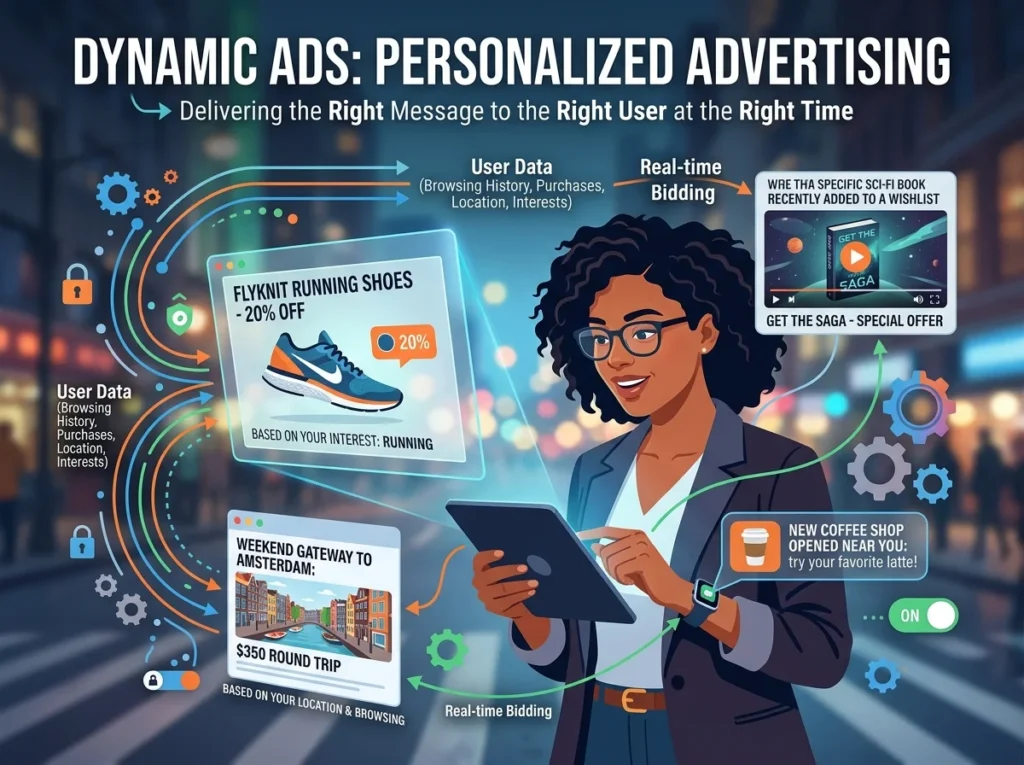
Ads that change based on person viewing. Person viewed blue shoes. See blue shoe ads. Person viewed red shoes. See red shoe ads.
Personalized. Relevant. Convert better.
How Dynamic Ads Work
Person visits site. Views specific product. Pixel records it. Later, person sees ad with that exact product. Personalization.
Requires product feed. List of products. Prices. Images. Then dynamic system shows relevant ads.
Benefits of Dynamic Ads
Highly relevant. Person sees product they viewed. More likely to convert. Better personalization. Higher CTR. Higher conversion.
More work to set up. But worth it. Results are excellent.
Product Catalogs
Create product catalog. All products. All details. Upload to platform. Dynamic system uses it.
Automatic updates. Products change. Catalog updates. Ads stay current.
Ecommerce Specific
Works great for ecommerce. Less clear for services. But possible for both.
Services can show service pages. Testimonials. Before-and-afters. Personalization.
Cart Abandonment: The Biggest Opportunity
Many carts get abandoned. Cart abandonment recovery is one of the highest-ROI retargeting opportunities, but it requires proper setup and ongoing optimization. If managing multiple retargeting campaigns becomes overwhelming, professional PPC management and optimization ensures your abandoned cart sequences are always running at peak efficiency, recovering maximum revenue from lost customers
Why Carts Abandoned
Changed mind. Price shock. Unexpected shipping. Distraction. Technical issue. Many reasons.
But person was ready to buy. Very high intent. High conversion probability if brought back.
Abandoned Cart Email
Send email immediately. Remind them. Show what’s in cart. Offer incentive maybe. Recover sale.
Simple. Effective. Recovery rate: 10-15% typical. Worth doing.
Abandoned Cart Ads
Show ads of exact items in cart. Reminder. Urgency. Incentive. Bring them back.
More aggressive than email. More expensive. But very effective.
Recovery Sequence
Email one hour after abandon. Show ad next day. Email day after. Show ads for week. Sequence brings people back.
Timing matters. Frequency matters. Balance needed.
Incentive Strategy
Discount works. “20% off if you complete purchase.” Urgency works. “Offer expires tonight.” Free shipping works. “Free shipping today only.”
Incentive brings back. But margin impact. Balance needed.
Customer Re-engagement: Keeping Them Coming Back
Beyond one-time conversion.
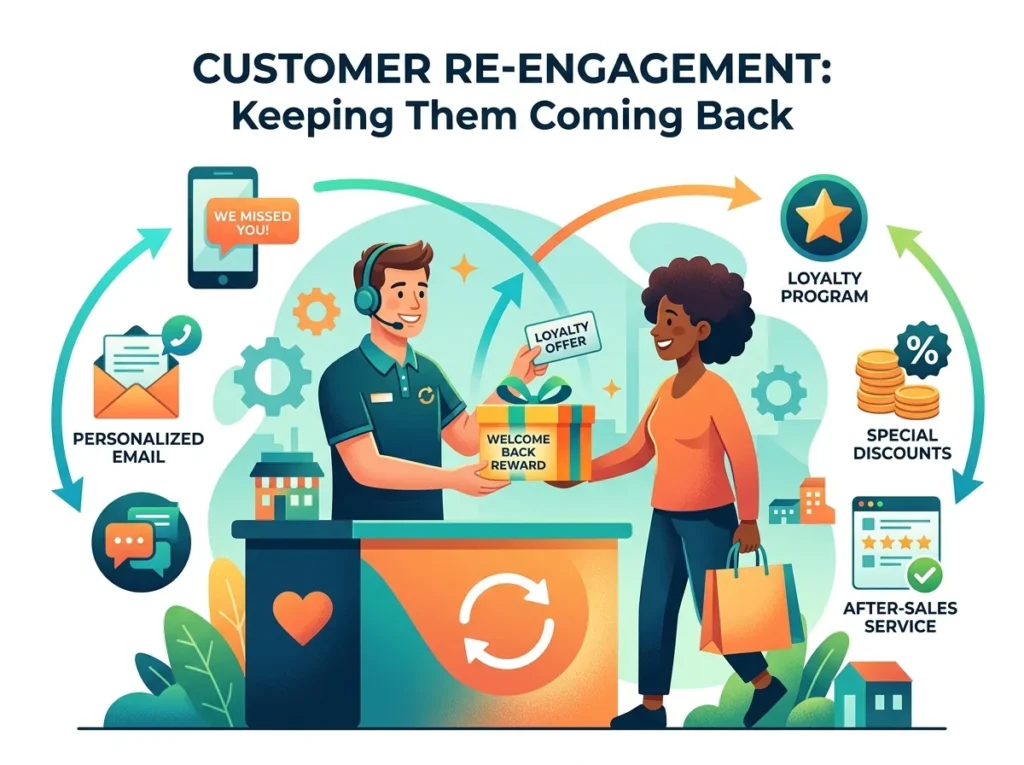
Why Re-engagement Matters
One-time customers gone. Repeat customers grow revenue. Lifetime value much higher. Focus on repeat.
Remarketing retargeting campaigns keep them engaged. Bring them back. Purchase again.
Email Re-engagement
Send occasional emails. New products. Sales. Blog posts. Keep brand top-of-mind.
Regular contact without being annoying. Once monthly works well.
Exclusive Offers
Special offers to past customers. “You’re VIP. 15% off.” Exclusive deals. Make them feel special.
Brings people back. Increases repeat purchase. Grows revenue.
New Product Announcements
Past customers first to know. New products. New features. Email them first.
People who bought before most likely to buy again. Prioritize them.
Loyalty Program
Reward repeat customers. Points per purchase. Discounts on future. Free stuff. Recognition.
Encourages repeat. Increases lifetime value. Profitability improves.
Seasonal Campaigns
Holiday season. Summer. Back to school. Seasonal emails to past customers.
Remind them. Show relevant products. Increase seasonal sales.
Setting Up Remarketing Retargeting Campaigns
How to get started.
Step 1: Install Pixel
Google Ads pixel. Facebook pixel. Install on website. Or hire developer.
Cost: Free. Or $200-$500 if hiring developer. One-time setup.
Step 2: Create Audiences
Define which visitors to track. Homepage visitors. Product page visitors. Cart abandoners.
Different audiences for different campaigns.
Step 3: Create Ads
Design ads. Different ads for different audiences. Compelling copy. Relevant images. Strong CTA.
Match audience. Match message. Higher conversion.
Step 4: Set Bid and Budget
How much to spend. Daily budget. Bid amount. Let it run. Monitor results.
Start conservative. $5-$10 daily. Scale if profitable.
Step 5: Monitor and Optimize
Watch metrics. CTR. Conversion rate. Cost per conversion. Optimize continuously.
Turn up winning ads. Turn off losing ads. Improve results.
Real Results of Remarketing Retargeting Campaigns
What’s realistic.

Typical Conversion Rate
Remarketing: 3-5% conversion rate. Higher than cold traffic usually. People already interested.
Best case: 10%+ conversion. Poor case: 1% conversion. Usually 3-5%.
Typical ROI
Spend $1,000. Get $3,000-$5,000 revenue. 3-5x ROI. Excellent results.
Best case: 10x ROI. Poor case: 1.5x ROI. Usually 3-5x.
Timeline to Results
Data: 2-4 weeks. Need visitors. Need pixel data. Need audience.
Campaigns: 4-8 weeks. Need time to optimize. Need conversions. Results compound.
FAQ About Remarketing Retargeting Campaigns
Is pixel tracking legal?
Legal with disclosure. Privacy policy needed. Cookie notice needed. Comply with regulations. Legal but requires compliance.
GDPR and CCPA have specific rules. Follow them. Stay legal.
What audience segmentation is most important?
Cart abandoners most valuable. Highest intent. Highest conversion. Prioritize this segment.
Product viewers second. High intent. Good conversion. Segment this.
How much should I spend on retargeting?
20-30% of ad budget is typical. Big opportunity. High ROI. Worth significant budget.
If ad budget is $1,000. Spend $200-$300 on remarketing. Good allocation.
How long should I retarget someone?
30 days is standard. Maybe 60 days for expensive items. Beyond 60 days. Person likely moved on.
Frequency: 3-5 ads per week. Not too many. Not too few. Balance needed.
Do dynamic ads really work better?
Yes. Significantly better. Person sees exact product they viewed. Relevant. Higher conversion. Worth setup.
Setup more complex. But results justify it.
How do I reduce ad frequency?
Cap impressions. Person sees max 5 ads per day. Prevents annoyance. Prevents wasted spend.
Balance frequency. More frequent = more conversion. But also more annoyance. Find sweet spot.