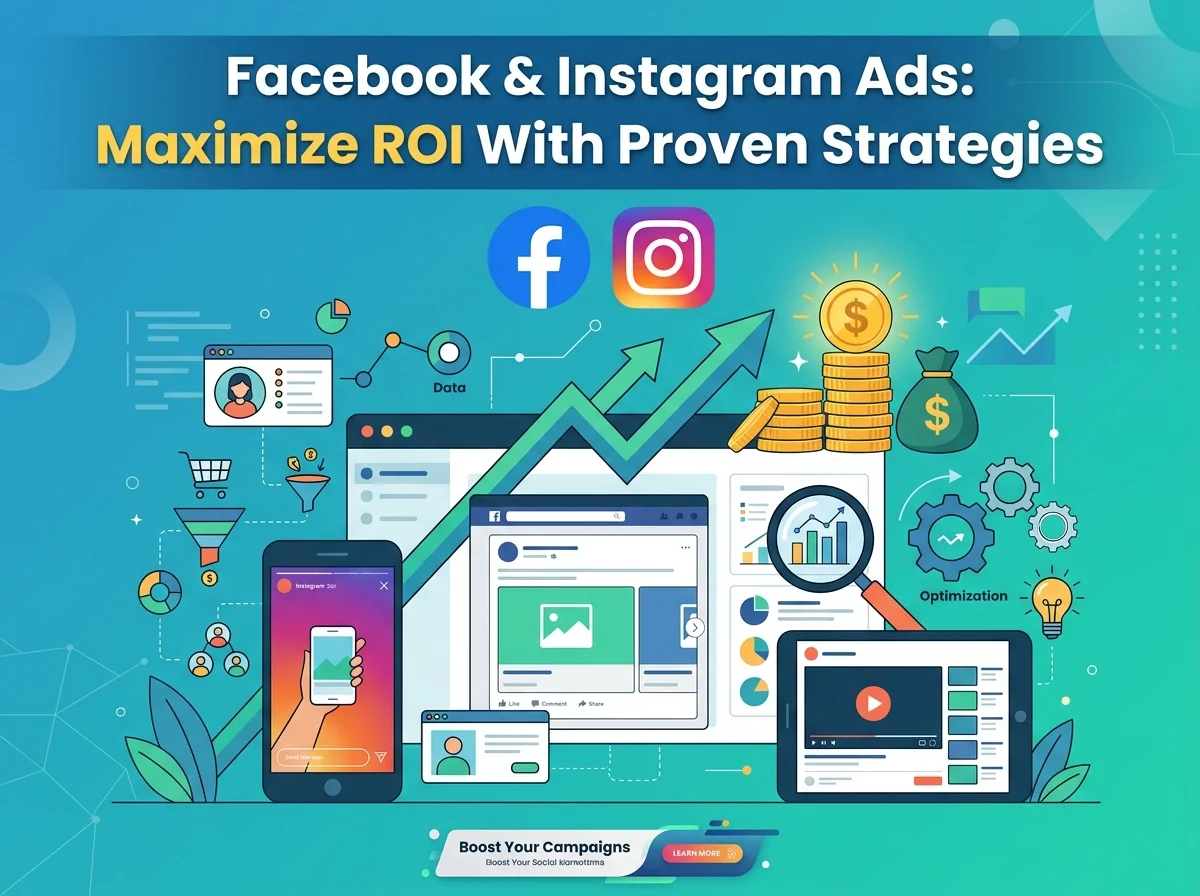
You’ve heard about Facebook Instagram ads ROI. Businesses making money. Getting leads. Building customer bases. But you’re nervous. You’ve heard horror stories too. People spending money. Getting nothing back. You don’t want to be that person.
Here’s the truth: Facebook Instagram ads ROI works when done right. Most businesses fail because they don’t understand the system. They throw money at ads hoping something sticks. That’s not strategy. That’s gambling. Real social media advertising is simple once you understand it. This guide walks you through everything. How audience targeting actually works. How to create winning ad creative design. How conversion tracking prevents wasted spend. How budget allocation maximizes returns. Real ROI numbers. Real mistakes to avoid.
Facebook and Instagram ads are powerful, but they work best as part of a complete paid advertising strategy. Understanding how social ads complement Google search ads helps you allocate budget smartly. See our PPC advertising strategy across all platforms guide for the complete picture By the end, you’ll understand how to run profitable ads.
Why Facebook Instagram Ads ROI Matters for Your Business
Social media advertising on Facebook and Instagram reaches billions of people. More importantly, it reaches the right people. People interested in what you offer. That’s powerful. That’s different from traditional advertising.
Facebook and Instagram know everything about their users. Age. Location. Interests. Behaviors. Buying habits. This data lets you target precisely. You’re not paying for eyeballs. You’re paying for interested clicks. That efficiency is everything.
ROI potential is massive. Spend $1,000 on ads. Get $5,000 in revenue. That’s real. That happens constantly. It only works if your strategy is sound. But when it works, it scales beautifully. More ad spend means more leads means more revenue. That’s the power of Facebook Instagram ads ROI.
Speed matters too. Google Ads takes months to build. Social media advertising works tomorrow. You launch ads. You get results. You optimize. You scale. Fast feedback loop. Fast results.
Facebook and Instagram build awareness, but when people are ready to buy, they search Google. That’s where Google Ads for high-intent search traffic captures customers at the decision moment. Both platforms working together create a complete funnel
Understanding Audience Targeting: Reaching the Right People
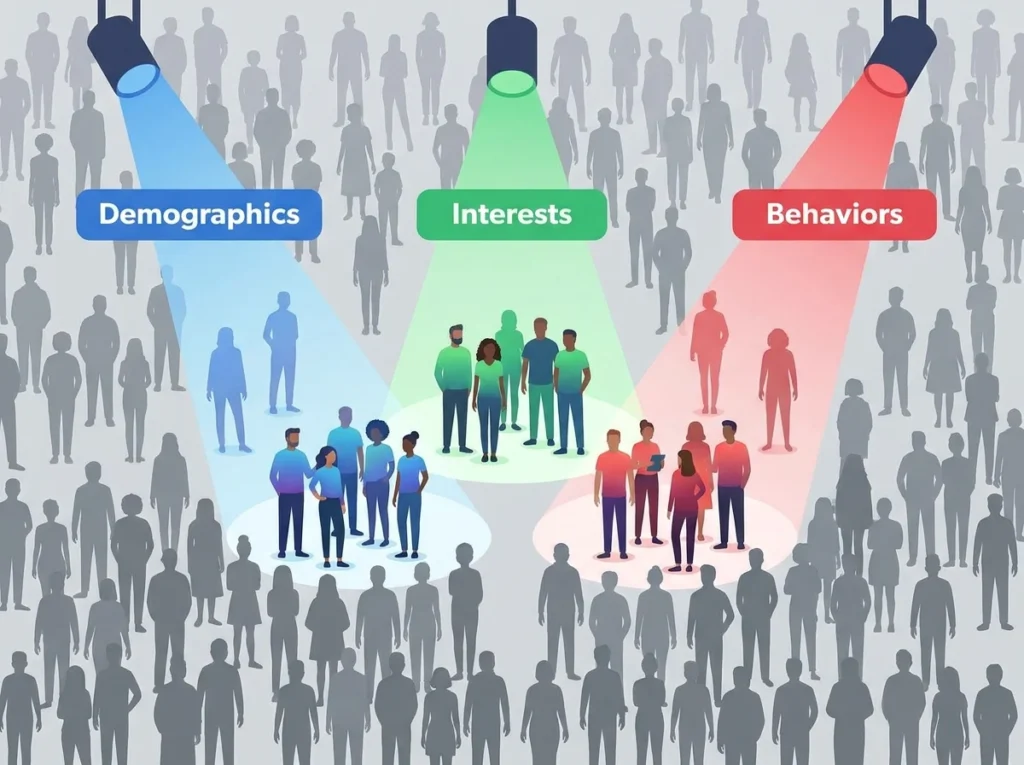
Audience targeting is where the magic happens. Precision targeting determines success or failure.
Who Should You Target?
Start with customer avatars. Who’s your ideal customer? Age range. Income level. Location. Interests. Behaviors. Be specific. Vague targeting wastes money.
If you sell kitchen countertops, target homeowners. Ages 35-65. Higher income. Recently searched for home renovations. Engaged with home design content. That’s specific. That’s powerful.
How Detailed Can Targeting Get?
Facebook and Instagram offer detailed options. Audience targeting by age. Gender. Location (down to postal codes). Interests. Behaviors. Purchase history. Education. Relationship status. Device type. Operating system.
You can target people who visited your website. People who engaged with your Facebook page. People similar to your current customers. Interest-based targeting. Look-alike audiences. Detailed targeting is available.
Creating Custom Audiences
Custom audiences are powerful. Upload your customer email list. Facebook finds those people. You advertise to them. Retargeting is similar. Someone visits your website. You show them ads on Facebook and Instagram. Brings them back. Reminds them.
Interest-Based Targeting
Target people interested in specific topics. Home improvement. Kitchen design. Interior design. Real estate. These people are actively interested. More likely to convert.
Lookalike Audiences
Facebook identifies people similar to your customers. Behavioral patterns. Interests. Demographics. Creates an audience of people likely to buy from you. Often the best performers.
Ad Creative Design: Making Ads That Convert
Great ad creative design gets clicks. Bad design gets ignored. Creative matters enormously.

Image Selection
Images stop the scroll. Eye-catching images get clicks. Show your product or service in action. Before-and-after photos work incredibly well. Transformation images convert.
Professional photos outperform amateur. Invest in quality photography. Real customers (not stock photos) perform best. Authentic beats polished.
Size matters. Different placements need different dimensions. Square images (1:1). Vertical images (4:5). Carousel images. Ensure proper sizing. Cropped images look bad. Prevent this.
Video Content
Video gets more engagement than images. Show transformation. Tell a story. Keep it short. 15-30 seconds ideal. Mobile-first (vertical video). Sound optional. Captions recommended.
User-generated video outperforms produced video. Real customers sharing experiences. Authentic. Relatable. Converts better.
Copywriting for Ads
Copy should be short. Two-three sentences maximum. Hook first. Grab attention. Then explain benefit. Call-to-action last. “Learn More.” “Shop Now.” “Call Today.” Be direct.
Address pain points. “Tired of ugly countertops?” “Want a modern kitchen?” Connect emotionally. Logic doesn’t sell. Emotion sells.
Headline and Description
Headlines are critical. 25 characters ideal. Clear benefit. Curiosity. “Transform Your Kitchen.” “Modern Countertops for Less.” Call-to-action in headline. Works better.
Description is secondary. Brief. Expand on headline. Add details. Maximum 125 characters. Make it count.
Call-to-Action Buttons
Clear CTA buttons get clicks. “Learn More.” “Shop Now.” “Call Us.” “Book Consultation.” Match your goal. Landing page should match CTA. Consistency is critical.
Conversion Tracking: Measuring What Actually Matters
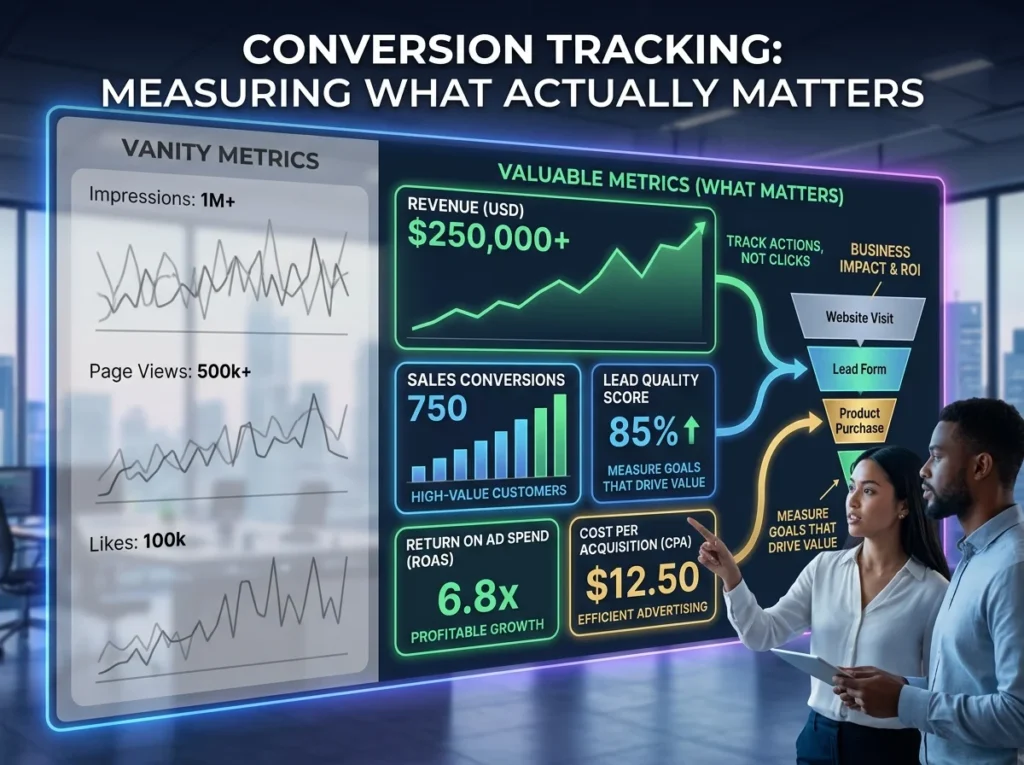
Conversion tracking is essential. You must know what works. What doesn’t. Track everything.
Setting Up Tracking
Install Facebook Pixel on your website. Code snippet that tracks user behavior. Tracks page views. Clicks. Purchases. Form submissions. Phone calls.
Without tracking, you’re blind. You don’t know what converts. You can’t optimize. Set up tracking before launching ads. Non-negotiable.
What to Track
Track form submissions. E-mail signups. Phone calls. Website visits. Purchases. Add to cart actions. Any action indicating interest. Different metrics tell different stories.
For service businesses, phone calls matter. Ensure call tracking works. Know which ads generate calls. Cost per call. Call quality.
Pixel Events
Facebook Pixel fires events. “View Content.” “Add to Cart.” “Purchase.” “Lead.” “Complete Registration.” Custom events too. Track specific actions important to your business.
Setup matters. Correct event mapping ensures accurate tracking. Wrong mapping ruins data. Get it right before spending money.
Conversion Value
Assign value to conversions. Lead worth $100? Purchase worth $500? Assign realistic values. Facebook optimizes toward highest-value conversions. Accurate values improve optimization.
Attribution and Multi-Touch
Understand multi-touch attribution. Customer sees ad. Visits website. Doesn’t convert. Sees ad again. Converts. Which ad gets credit? Facebook assigns to most recent. But the first ad contributed too.
This matters for understanding true Facebook Instagram ads ROI. One ad brought awareness. Another closed the sale. Both mattered. Understand this.
Budget Allocation: Spending Smart Money
How much to spend? How to allocate budget? Strategic decisions.
Starting Budget
Begin with $500-$1,000 monthly. Test market. See what works. If ROI is positive after 4-6 weeks, increase. If ROI is negative, troubleshoot before increasing. Budget scales with profitability.
Campaign vs Ad Set vs Ad Budgets
Campaigns contain ad sets. Ad sets contain ads. Budget can be set at campaign or ad set level. Usually ad set level is better. Gives more control. Allows individual ad set optimization.
Daily vs Lifetime Budget
Daily budget spreads spending throughout month. Steadier results. Easier to manage. Recommended for most businesses. Lifetime budget spends whatever needed to reach goal by end date. Less control. Less recommended.
Budget Allocation Across Campaigns
Multiple campaigns? Allocate budget strategically. Allocate more to top performers. Less to underperformers. Test new campaigns small. Scale winners.
Track which campaigns convert best. Allocate accordingly. Continuously optimize. Winners get more money. Losers get paused.
The Social Media Advertising Strategy That Works
Putting it all together.

Phase 1: Foundation (Week 1-2)
Set up tracking. Install pixel. Create custom audiences. Define avatar. Research competitors. Create initial creative. Launch small test campaign ($500-$1,000). Monitor closely.
Phase 2: Testing (Week 3-6)
Run campaign. Gather data. Minimum 100 conversions before optimizing. Understand what works. CTR (click-through rate). CPM (cost per mille/thousand impressions). CPC (cost per click). CAC (customer acquisition cost).
Phase 3: Optimization (Week 7-10)
Pause underperformers. Double down on winners. Test new creatives. New audiences. New copy. Continuous improvement. Small changes. Measure impact.
Phase 4: Scaling (Week 11+)
Increase budget for winning campaigns. Expand to new audiences. Test new placements. Test new creative variations. Scale profitably. Track ROI carefully.
Common Social Media Advertising Mistakes
Learn from others’ mistakes.
Mistake 1: Targeting Too Broad
Target everyone. Costs too much. Conversions are low. Wasted spend. Narrow targeting. Specific audiences. Better results. Lower costs.
Mistake 2: Bad Creative
Boring images. Unclear copy. No clear benefit. No call-to-action. Ad gets ignored. Invest in creative. Test variations. Good creative changes everything.
Mistake 3: No Tracking
Launch ads. Don’t track results. Can’t optimize. Can’t improve. Blind spending. Set up tracking first. Non-negotiable.
Mistake 4: Wrong Landing Page
Ad promises one thing. Landing page shows something different. Disconnect kills conversions. Landing page must match ad. Message consistency is critical.
Social media traffic behaves differently than search traffic. Landing pages need different approaches to convert cold visitors from Facebook and Instagram. Master conversion rate optimization for social media traffic to improve ROI dramatically
Mistake 5: Giving Up Too Fast
Run ads for two weeks. See no results. Quit. Ads need time. Algorithms need data. Minimum 4-6 weeks. Gather data. Then optimize.
Mistake 6: Ignoring Mobile
Most users on mobile. Ads must look good on mobile. Mobile-first design. Vertical video. Quick loading. Mobile optimization is essential.
Mistake 7: Poor Audience Targeting
Target wrong people. Cost per conversion is high. Refine audiences. Get specific. Right people. Lower costs. Better conversions.
Real ROI Numbers for Facebook Instagram Ads ROI
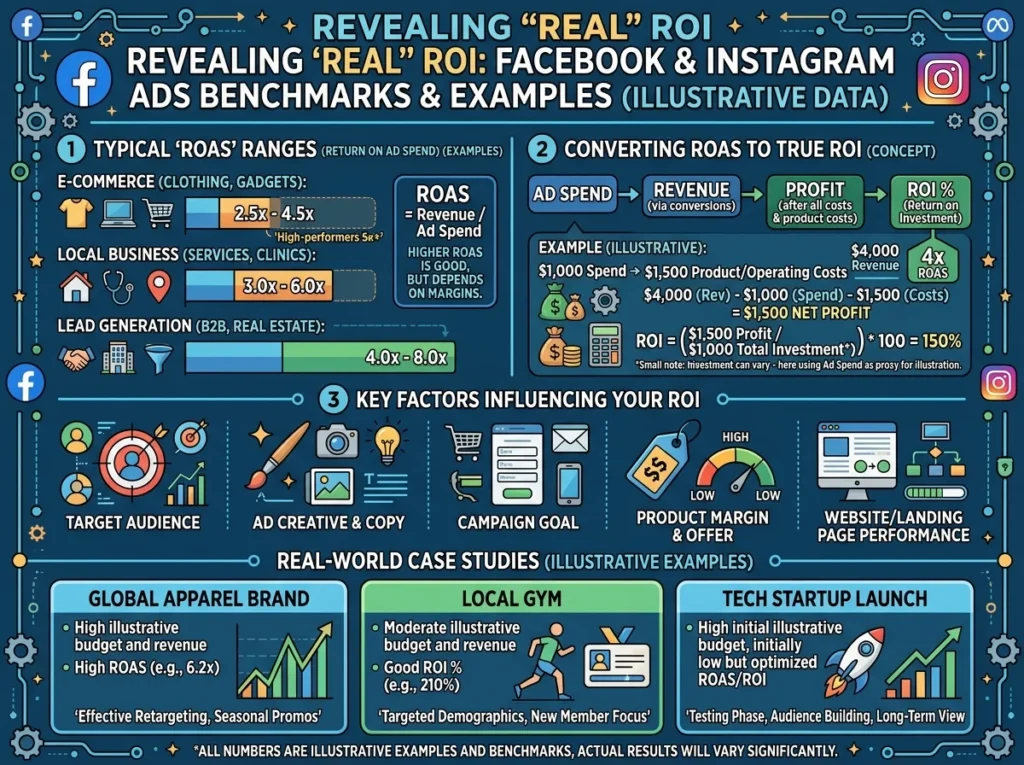
What’s realistic?
Best Case Scenario
Spend $1,000. Get $5,000-$10,000 revenue. 5-10x ROI. Happens. Requires great product. Great targeting. Great creative. Great landing page. All pieces working.
Good Performance
Spend $1,000. Get $2,000-$3,000 revenue. 2-3x ROI. Excellent results. Profitable. Sustainable. Realistic goal.
Moderate Performance
Spend $1,000. Get $1,200-$1,500 revenue. 1.2-1.5x ROI. Positive but barely. Need to improve. Optimize. Or pause campaign.
Poor Performance
Spend $1,000. Get under $1,000 revenue. Unprofitable. Troubleshoot immediately. Fix targeting. Fix creative. Fix landing page. Or pause and reassess.
FAQ About Facebook Instagram Ads ROI
How much should I spend on ads monthly?
Start with $500-$1,000. Test market. If ROI is positive after 4-6 weeks, increase budget. Profitable campaigns can grow to $5,000+ monthly. Budget should scale with profitability. Never spend more than you can afford to lose during testing phase.
How long before I see results?
Ads go live immediately. You’ll see clicks within hours. But meaningful data takes time. Give campaigns 2-4 weeks to gather data. 4-6 weeks to understand patterns. Full optimization takes 8-12 weeks. Patience is critical.
What’s a good conversion rate?
1-3% is typical for social media advertising. You get 100 clicks. 1-3 become customers. Varies by industry. E-commerce is lower. Service businesses higher. 3-5% is excellent. Under 1% needs optimization.
Should I use Facebook or Instagram?
Both work. Facebook reaches older demographics. Instagram reaches younger. Facebook converts better for some. Instagram for others. Use both. Let data guide. Split budget based on performance.
What’s the difference between awareness, consideration, and conversion campaigns?
Awareness campaigns show ads to broad audience. Build brand awareness. Lower cost. Lower conversion. Consideration campaigns target interested people. Build consideration. Mid-level cost. Mid-level conversion. Conversion campaigns target high-intent people. Close sales. Higher cost. Higher conversion. Use all three.
Can I manage ads myself or hire someone?
You can manage if detail-oriented and willing to learn. Learning curve is 2-3 months. If you value your time, hire someone. Agency costs $500-$2,000 monthly. If they generate $5,000+ monthly value, they pay for themselves. Many use hybrid: agency manages. You oversee strategy.